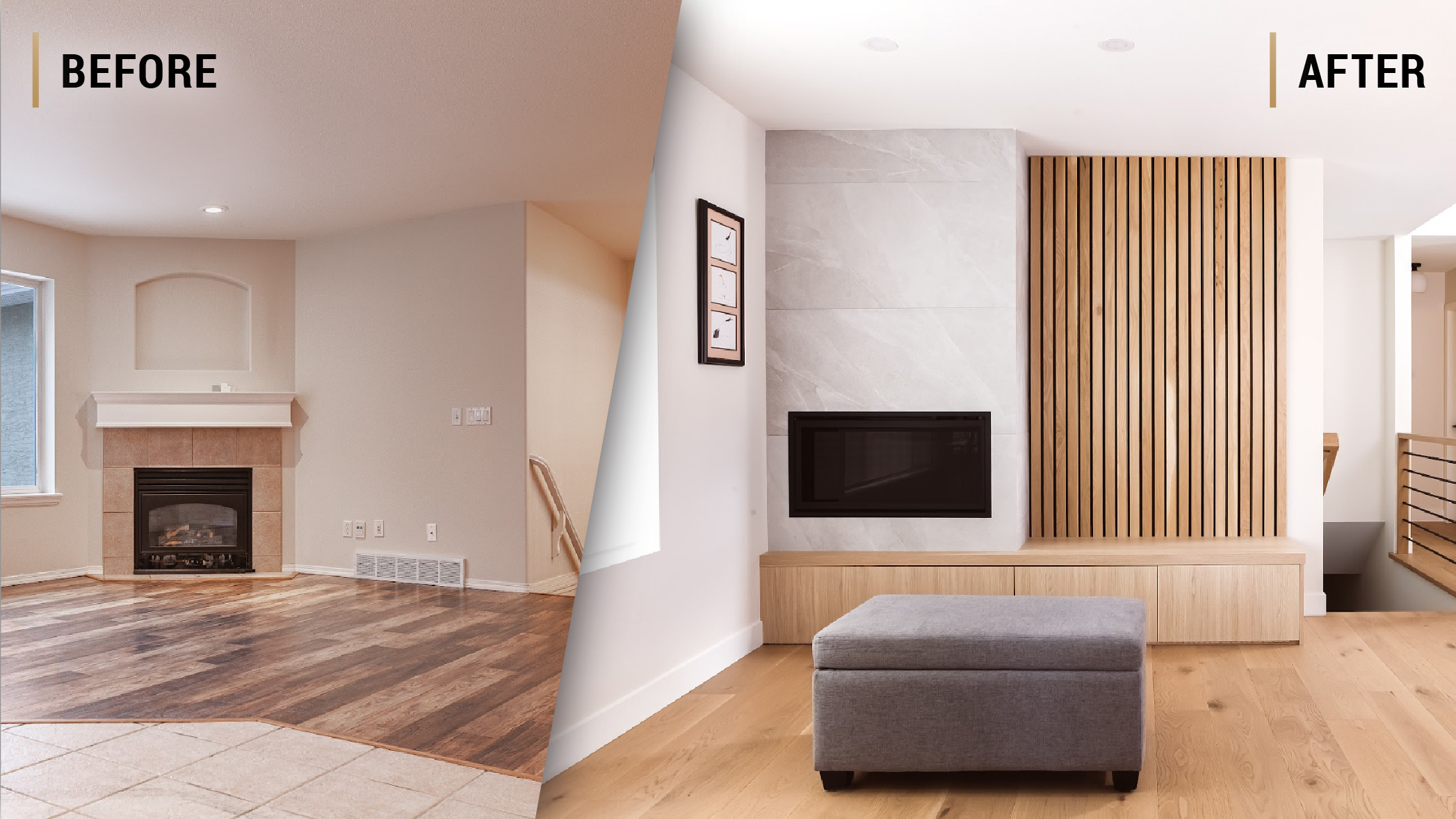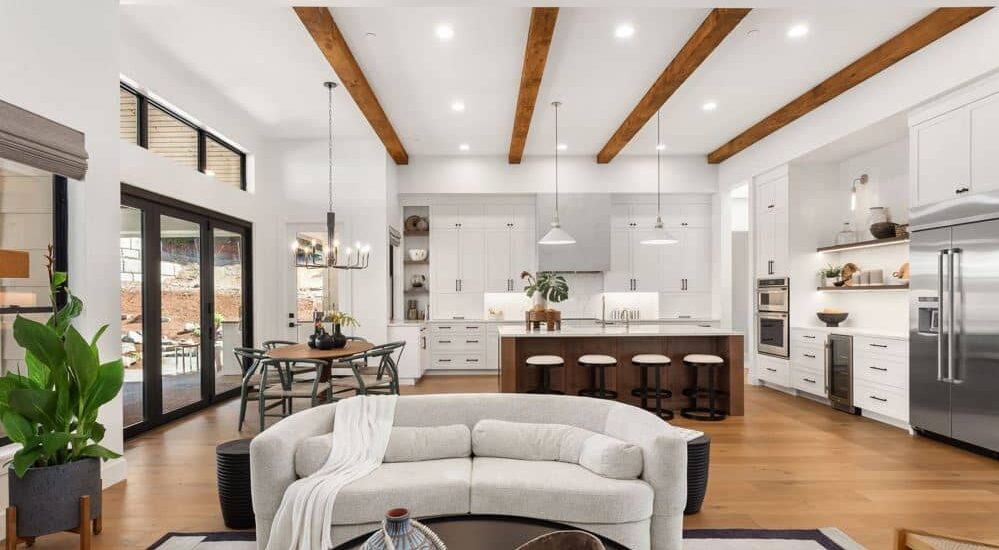
An open concept kitchen is a layout where the cooking area shares a continuous, unobstructed space with the dining room, living room, or both, without walls separating them. In Kelowna homes, it’s one of the most requested changes we see on renovation projects, and honestly it’s been that way for a while now.
The appeal makes sense. You’re cooking and you’re still part of the conversation happening in the next room, the space feels bigger, natural light moves through the whole main floor instead of getting blocked off by a wall, and if you’ve got kids, you can actually keep an eye on what’s going on in the living room while you’re at the stove. That’s a pretty compelling list of reasons, which is why so many people want it.
That said, it’s a meaningful structural change, and the best results come from planning it properly rather than just removing a wall and seeing what happens.
What makes an open concept kitchen layout work in Kelowna homes
An open concept kitchen works well when the layout is planned around how the household actually uses the space, not just how it looks in photos.
The most important thing is still the triangle between the sink, stove, and fridge, and in a walled kitchen you optimize that triangle without worrying too much about how it relates to the rest of the room, but in an open layout you’re also managing sight lines, traffic flow coming in from other rooms, and the fact that your kitchen is just visible from everywhere now. If the layout isn’t well thought out, open concept can start to feel less like an open home and more like a kitchen that’s hard to escape from when you’ve got company over.
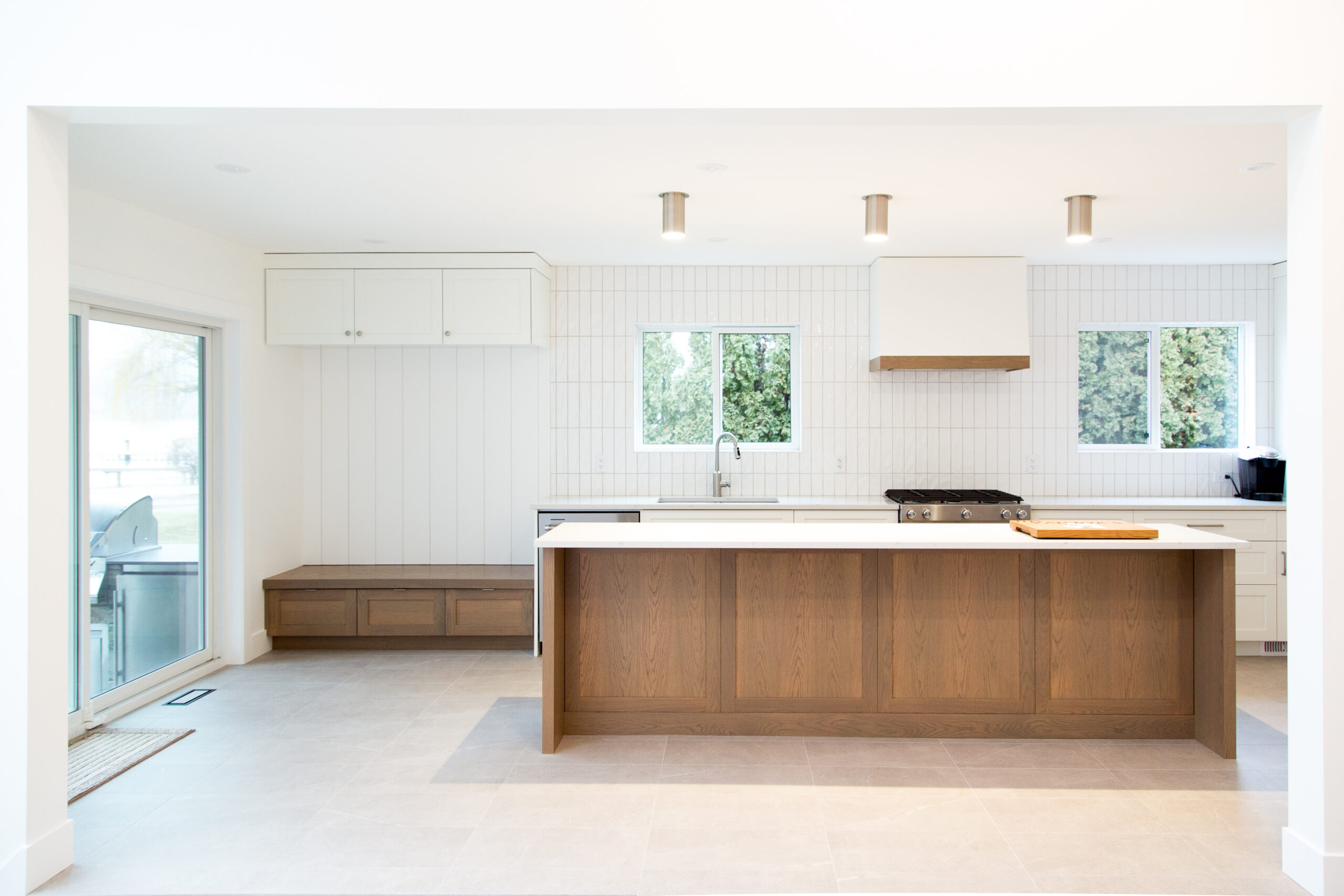
Islands and peninsulas do a lot of work in these layouts. They define the kitchen zone without closing it off, give you extra prep space and seating, and help with storage in a big way. Most of the open concept kitchen renovations in Kelowna we complete include some version of an island, partly for the function and partly because it creates a natural, relaxed boundary between the cooking zone and the living space.
The structural side: walls, beams, and what you need to know before you start
Removing a wall to open up a kitchen isn’t always complicated, but it’s never just “remove the wall.” Before anything comes down, you need to know whether it’s load-bearing, because a load-bearing wall supports the weight of the structure above it and if you take one out without replacing that support, you’ve got a serious problem on your hands.
The solution is usually a beam, sized and installed to carry the load the wall was carrying, and done right, it’s seamless and sometimes even becomes a bit of a design feature in the space. Done wrong, or skipped over entirely because someone figured it’d probably be fine, it’s a structural issue that doesn’t come up until it’s already expensive.
Walls also hide things: electrical wiring, plumbing, HVAC ducts, and opening a kitchen wall often means rerouting some or all of that, which affects both budget and timeline. None of this is a reason not to do the project; it’s just a reason to have a contractor properly assess the wall before you commit to a specific plan or number. We walk through all of this as part of how we approach residential renovations, so there aren’t any unexpected bottlenecks once work starts.
Flooring in open concept kitchens
One of the most common questions on open concept projects is whether to run the same flooring through the kitchen and living areas or to use different materials, and the honest answer is that consistent flooring almost always looks better and makes the space feel larger, because when the floor changes right at the point where the kitchen meets the living room it draws a line that partially defeats the whole purpose of going open concept in the first place.
The practical concern people have is that kitchen floors take more wear than living room floors, and that’s true, but if you’re using hardwood throughout, with a quality finish and proper sealing handles that well enough for most households. Luxury vinyl plank is another solid option because it’s durable, water-resistant, and comes in finishes that look good across both zones without looking like a compromise.
Where different flooring actually makes sense is when there’s a meaningful level change or a strong design reason to separate the zones; otherwise, the visual continuity is worth more than the theoretical durability benefit of switching materials halfway across the room.
Ventilation and noise: two things people don’t think about until after
Two things come up after open concept renovations more than almost anything else, and they’re both worth thinking about before the walls come down.
Ventilation matters more in an open kitchen because cooking smells, steam, and smoke now have access to the whole main floor instead of staying contained, so a good range hood, properly sized and vented to the outside rather than just recirculated back into the room, does a lot of the work here. It’s worth spending on this upfront rather than retrofitting later when you realize the smell of last night’s dinner is still in the couch cushions.
Noise is the other one. Dishwashers, blenders, exhaust fans, the general sounds of someone cooking: these carry further in an open space than most people expect, and while most households adjust and it’s not a real issue day-to-day, it’s worth knowing about if you’ve got a home theatre setup or someone who works from home on the main floor.
Neither of these is a reason to keep the walls up. They’re just things to plan for during the design phase, so they don’t catch you off guard later.
Privacy options that don’t wreck the open concept
Sometimes you want to close the kitchen off a bit, whether it’s for a dinner party where you’d rather guests not see the prep zone, or just for practical reasons that come up over time. There are a few ways to do this without permanently dividing the space back into what you had before.
Sliding barn doors or pocket doors on a single opening work well when the layout has a natural pinch point, and large pendant lighting combined with a change in ceiling height can psychologically separate zones without any physical barrier at all. Strategic cabinet placement on an island can also screen the cooking area from the seating zone in a way that feels intentional rather than like an afterthought.
None of these are required, but it’s worth thinking about whether you’d ever want the option before you finalize the layout, since it’s a lot easier to plan for upfront.
Is open concept right for your Kelowna home?
Open concept works best in homes where the main floor is large enough to absorb the kitchen into the living space without crowding it, where the household wants that connection between cooking and entertaining, and where the structural work is straightforward enough to stay within a reasonable budget. It’s less ideal in smaller homes where kitchen noise and clutter would just dominate the whole living area, or where the structural complexity makes the project cost more than the result really justifies.
The best way to know is to have a contractor walk the space with you before you decide. If you’re considering an open concept kitchen renovation in Kelowna, we’re happy to do that. Get in touch here or call 778-933-8818.
Frequently asked questions
How much does it cost to open up a kitchen in Kelowna? It depends heavily on whether the wall is load-bearing, what’s running inside it (electrical, plumbing, HVAC), and how much finishing work is involved after the fact. A non-load-bearing wall removal with basic finishing can be relatively modest, but a load-bearing wall that needs a structural beam plus rerouted utilities and full refinishing is a more significant investment, and a site visit is honestly the only reliable way to get an accurate number.
How do I know if my kitchen wall is load-bearing? The most reliable way is to have a contractor or structural engineer assess it, because the general visual indicators, like whether the wall runs perpendicular to floor joists or sits above a beam in the basement, can be misleading, and older Kelowna homes especially have construction methods that don’t always follow the patterns you’d expect. Don’t guess on this one.
Does open concept affect home value in Kelowna? Generally yes, open concept layouts are popular with buyers and tend to read as a positive in resale, but the value depends a lot on how well it’s executed; a poorly planned open concept with awkward flow or visible structural patches can work against you just as much as a well-done one works for you.