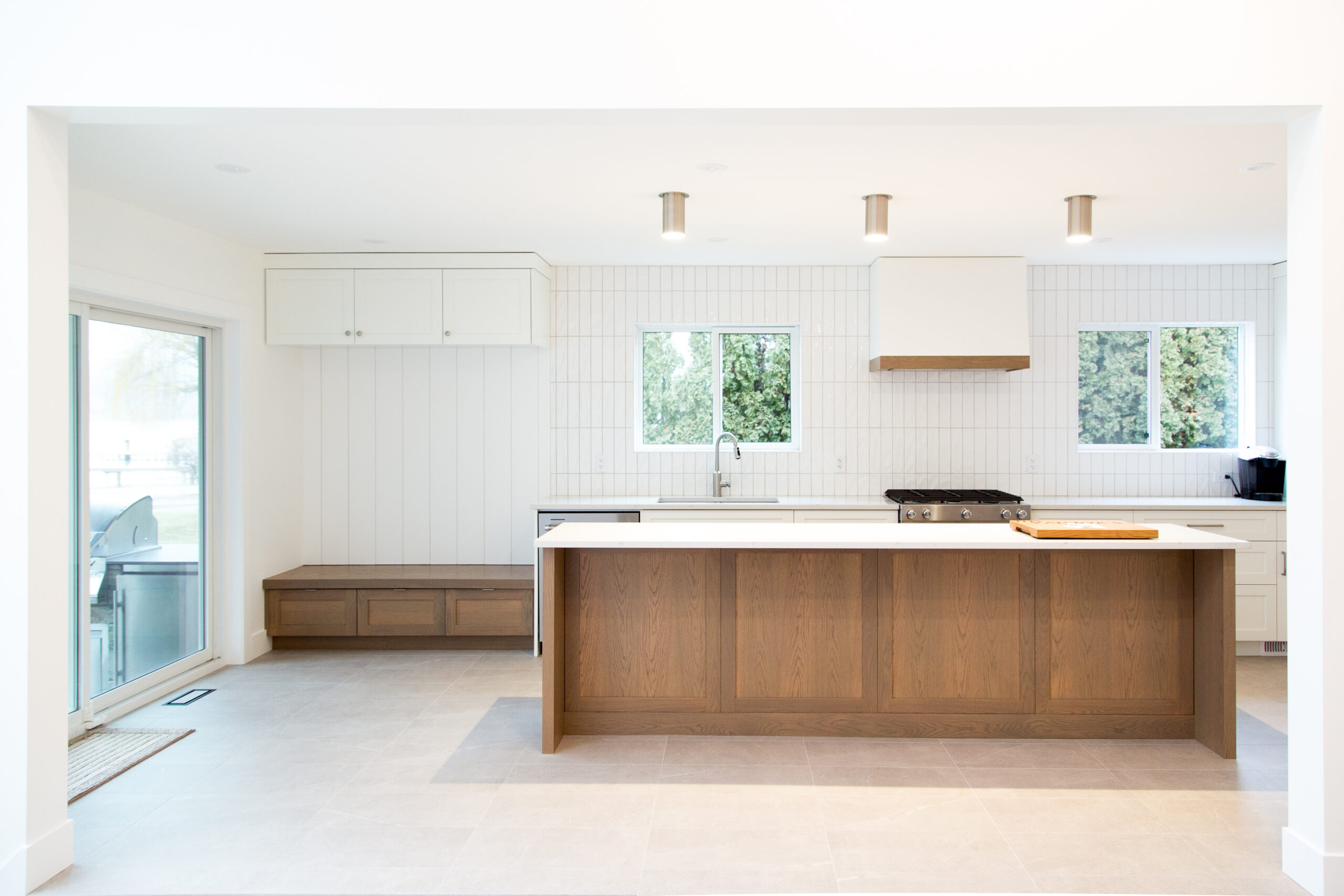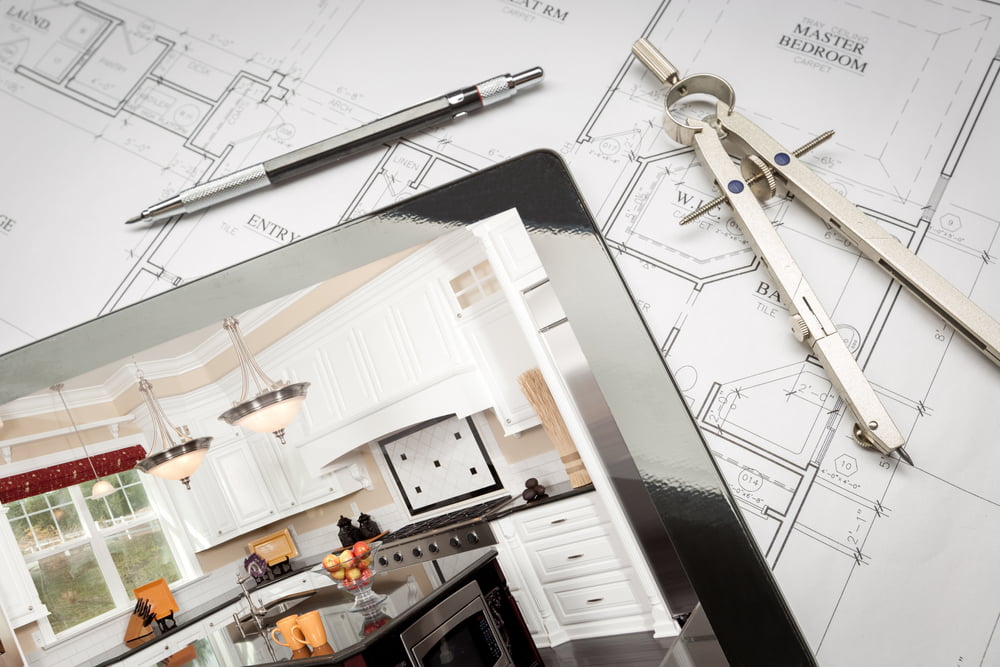
Most kitchen renovations end up going one of two ways, and neither one is what you actually want. Either you get a gorgeous room that doesn’t really work when you’re trying to cook dinner for four on a Tuesday night, or you end up with a practical setup that looks like it got frozen in time somewhere around 1997. What you’re actually after is the middle ground, a kitchen that looks like the reason you decided to do the reno in the first place and also functions the way you genuinely use a kitchen day to day.
The good news is that most of this comes down to layout decisions that get made very early in the process, well before the pretty stuff like tile and hardware even enters the conversation. Once the plumbing’s been roughed in and the island has been framed, you’re pretty much locked into whatever you committed to, which is why spending real time on the layout before the walls go up is where the actual value lives.
Here’s what we pay attention to when we’re helping homeowners plan a kitchen renovation in Kelowna, and what we wish more people would think about before they get too deep into cabinet samples.
The work triangle still matters, even in open-concept kitchens
The work triangle has been around forever in kitchen design, and even though it sounds like something out of a 1970s coffee table book on designing homes, it still works. The main idea is that your stove, sink, and fridge should form a rough triangle, with no single leg shorter than about four feet or longer than about nine. Miss that window and you end up with a kitchen where cooking a regular weeknight meal feels like way more effort than it should, and most people can’t quite put their finger on why until somebody points it out.
Why the triangle gets harder in open-concept layouts
In open-concept kitchens the triangle gets trickier to nail, because you’ve got a lot more square footage to play with, and more space also means more opportunities to accidentally put your fridge fifteen feet from your stove and commit yourself to a small marathon every single time you cook dinner. If your island happens to be sitting in the middle of the triangle (which most islands do), you’re also adding a detour into every trip you take between stations, which adds up fast over the course of a year.
A quick test before you commit
One thing we tell homeowners to do before they sign off on a layout is to just walk through it mentally, on paper, and think about what it actually feels like to cook a normal meal in the space. Picture yourself making something simple like pasta, and pay attention to the trips you’d be taking between the stove and the sink and the fridge and whatever counter you’re working on. If it feels like you’re constantly backtracking or squeezing past someone who’s loading the dishwasher while you’re trying to get to the fridge, the layout probably needs another look before anything is finalized.
How to zone a kitchen without losing the openness
Zoning basically means thinking about what each part of your kitchen is actually for. You’ve got a spot where most of the prep happens, usually near the sink. You’ve got a cooking area built around the stove. Somewhere, the dishwasher and the clean dishes live. Somewhere, the pantry and dry goods go. In a smaller galley kitchen, this tends to sort itself out because there isn’t much room to get it wrong, but in a big open-concept space, you have to actually think it through, or the kitchen turns into one of those rooms where everything ends up on the island because there’s nowhere else for it to go.
The version of this we see go wrong most often is when nothing in the kitchen really has a designated home, so the counters stay cluttered no matter how often they get wiped down, and the homeowner ends up frustrated about a kitchen that looked incredible on the drawings.
Questions worth asking before you finalize the layout
A few things that are worth genuinely thinking through before you’re committed: Where does the mail actually land when somebody walks in the door, because it’s probably going to end up on the kitchen counter whether you planned for it or not, so you might as well plan for it? Where are the kids going to do their homework, and if the answer is the island, is the island actually set up for that kind of use? And where is the coffee station going to live, because it’s effectively its own zone even if most people don’t think about it that way until they’re standing in a finished kitchen wondering where to plug in the grinder?
Appliance placement is where renos quietly go sideways
Getting your appliances into the right spots is one of those things that feels like a minor detail when you’re staring at drawings, but it becomes enormous the second you’re actually living in the finished space and using it every day. This is the part of the process where small mistakes stop being things you can easily let go of, and start being the thing that just make you uncomfortable in your own home.
Fridge placement
Fridges need clearance on the hinge side so the door can actually swing open fully, which sounds obvious but gets overlooked a lot of the time. They also shouldn’t be positioned directly next to the stove if you can avoid it, because the heat coming off the range shortens the lifespan of the fridge’s compressor over time. And wherever you put it, make sure it isn’t blocking the main traffic path, because fridge doors and foot traffic don’t mix well at all.
Range and hood venting
Your hood fan really needs to vent outside rather than just recirculating air through a filter, because recirculating hoods are basically decorative and don’t do much for smoke or grease. If you’re planning to move the stove out to an island, make sure there’s a realistic path to vent it properly before you commit, because this is one of the most common places that kitchen reno budgets quietly blow up. Retrofitting a vent through concrete or through a finished ceiling is expensive and sometimes impossible, so it’s worth knowing the answer before the cabinets get ordered.
Dishwasher placement
Put the dishwasher next to the sink. Always. The number of kitchens out there where the dishwasher ended up across the room from the sink because “it looked better on the plan” is genuinely upsetting to think about, and it makes every single dish-washing session worse for the life of the kitchen.
Electrical outlets
You’re going to want more outlets than you think you need, and then probably a few more on top of that. Plan for the coffee maker, the toaster, the kettle, the stand mixer, phone chargers, and whatever new gadget you don’t own yet but will buy within two years. The electrical code minimum is just that, a minimum, and it really isn’t enough for how people actually use their kitchens in real life.
Storage that works harder than it looks
Open-concept kitchens have a particular storage problem that closed kitchens just don’t have to deal with, which is that because the kitchen is visible from the living room and the dining room at all times, any clutter hits about three times harder than it would in a closed space. You can’t just shove stuff onto the counter and forget about it, because now everybody watching TV on the couch is also looking at your mail pile and your half-drunk coffee from yesterday morning.
The solution to this isn’t more cabinets, it’s smarter cabinets that are actually designed around how you live. Some of our favourite moves include deep drawers instead of lower cabinets (you can see everything, reach everything, and they hold significantly more pots than cabinets do), a proper pantry even if it’s small (24 inches wide is enough to change how a kitchen functions), and appliance garages or tall cabinets with outlets built inside so the toaster and blender can live out of sight while still being plugged in and ready to use.
One more thing worth figuring out early is where the recycling and garbage bins are going to live, because nobody wants to walk into the house and immediately see three bins lined up against the wall. If you’re also looking at opening up the rest of the main floor while you’re in there, a full home renovation often makes more sense than a kitchen-only project, because you get to plan the storage and flow across the whole space at once instead of patching it together.
Seating and how people actually use the room
Island seating has become the default option for open-concept kitchens, and for good reason, but the details around it matter more than people realize when they’re in the design phase. A few common mistakes we see a lot are too many stools crammed into too little space (you want at least 24 inches of width per stool as a minimum, and more if the stools have arms), stools ordered at the wrong height (counter height is 36 inches, bar height is 42, and mixing the two up is more common than you’d expect), and not enough counter overhang for comfortable legroom (you want at least 12 inches, and more if you actually want people to stay and hang out while somebody’s cooking).
If the kitchen opens onto a dining room, it’s also worth thinking about whether the island seating is going to replace the dining table entirely or just supplement it. Both approaches are valid, but one of them will naturally become the “real” eating spot and the other will quietly turn into the homework-and-grocery-drop zone, so it’s worth figuring out which is which before the layout gets locked in.
How to start planning your kitchen reno
If you’re somewhere around the “vaguely thinking about it” stage, one of the most useful things you can do before talking to a contractor is spend a week genuinely paying attention to how you use your kitchen right now. Notice where you stand the most, what’s annoying, what you constantly have to reach around, what you wish was closer to the stove, what’s too far from the fridge. That kind of real information is significantly more useful to a contractor than “I want white cabinets and a big island,” because it lets us design around how you actually live instead of around a Pinterest board.
Once you’ve got a sense of what’s working and what isn’t, that’s when we usually come in. We’ll walk through what’s realistic in your specific space, what the budget looks like once you factor in the things most people forget about, and where we’d push back or suggest something different based on experience with similar kitchens. You can also have a look at our recent kitchen and home projects to see the kind of work we do and get a feel for whether we’re a fit.
Let’s design a kitchen that actually works
If you’re thinking about a kitchen reno in Kelowna and you want a contractor who’ll be straight with you about what’s going to work and what isn’t before you’ve spent money on it, get in touch. We’re happy to walk through ideas, budget, and timeline whenever you’re ready to have that conversation. Call our team or request a free estimate to get started.